

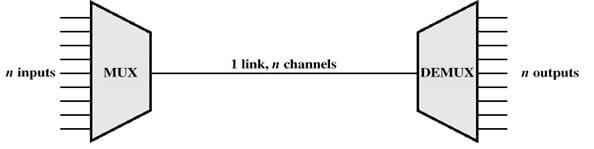
A lightweight asynchronous smux (Simple
MUltipleXing) library for Tokio. Wraps any AsyncRead + AsyncWrite + Unpin transport (TcpStream, TlsStream, …) and lets you spawn many
bi-directional MuxStreams over it — each one looks and behaves like a
plain TCP stream.
use async_smux::MuxBuilder;
use tokio::io::{AsyncReadExt, AsyncWriteExt};
use tokio::net::TcpStream;

#[tokio::main]
async fn main() {
    let tcp = TcpStream::connect("127.0.0.1:12345").await.unwrap();

    // build() returns three pieces:
    //   connector — open new outgoing streams
    //   acceptor  — receive peer-initiated streams
    //   worker    — the future that drives I/O; spawn it
    let (connector, mut acceptor, worker) =
        MuxBuilder::client().with_connection(tcp).build();
    tokio::spawn(worker);

    // Outgoing
    let mut s = connector.connect().unwrap();
    s.write_all(b"hello").await.unwrap();
    let mut buf = [0u8; 5];
    s.read_exact(&mut buf).await.unwrap();

    // Incoming
    while let Some(mut peer) = acceptor.accept().await {
        // ...
    }
}
The server side is identical except for MuxBuilder::server(). Client
and server differ only in stream-id parity (odd vs. even) so two peers
never collide on locally-allocated ids.
A complete working example is in examples/echo.rs.
Three handles share ownership of the connection state:
MuxConnector— opens streams.Clone-able.MuxAcceptor— receives peer-initiated streams. ImplementsStream<Item = MuxStream>.MuxWorker— the future that drains the underlying transport and dispatches frames. Spawn it withtokio::spawn(worker).
The worker exits when:
- All public handles (connectors + acceptors + streams) are dropped, or
MuxConnector::close().awaitis called explicitly, or- The peer closes the transport, or
- A keep-alive timeout fires (if configured).
close() performs an orderly shutdown: any frames already accepted by
AsyncWrite::poll_write are drained to the wire before the underlying
sink is closed. It also works without the worker being polled — useful
in test setups or sync teardown paths.
use async_smux::MuxBuilder;
use std::num::{NonZeroU64, NonZeroUsize};

let (connector, acceptor, worker) = MuxBuilder::server()
    // Send a NOP frame every N seconds to keep the connection alive.
    .with_keep_alive_interval(NonZeroU64::new(15).unwrap())
    // If we don't see any frame from the peer for this many seconds,
    // declare the connection dead and tear everything down.
    // Defaults to 3 × keep_alive_interval.
    .with_keep_alive_timeout(NonZeroU64::new(45).unwrap())
    // Per-stream idle timeout (seconds): close streams with no
    // recent traffic.
    .with_idle_timeout(NonZeroU64::new(60).unwrap())
    // Backpressure thresholds: cap how many frames may sit in the
    // tx/rx queues before poll_write / poll_read park.
    .with_max_tx_queue(NonZeroUsize::new(1024).unwrap())
    .with_max_rx_queue(NonZeroUsize::new(1024).unwrap())
    .with_connection(connection)
    .build();
All of these knobs are optional. Keep-alive and idle timeout are off unless explicitly enabled.
VERSION(1B) | CMD(1B) | LENGTH(2B LE) | STREAMID(4B LE) | DATA(LENGTH)

VERSION: 1
CMD:
    SYN(0)  open stream  (LENGTH must be 0)
    FIN(1)  close stream (LENGTH must be 0)
    PSH(2)  payload
    NOP(3)  keep-alive   (LENGTH must be 0; STREAMID is 0)
Stream id 0 is reserved for NOP; the library never hands it out and rejects any peer SYN that uses it.
| Implementation | Throughput (TCP) | Handshake |
|---|---|---|
| smux (go) | 0.4854 GiB/s | 17.070 K/s |
| async-smux (rust) | 1.0550 GiB/s | 81.774 K/s |
benches/bench.rs uses the unstable test crate so it requires a
nightly toolchain: cargo +nightly bench.
MIT — see LICENSE.